PCM Cooling Pillowcases: How Temperature-Regulating Fabric Works
Oct 09, 2026
PCM Cooling Pillowcases: How Temperature-Regulating Fabric Works
A warm pillow surface can make it difficult for some people to feel comfortable at bedtime. For hot sleepers and consumers who prefer a cooler sleeping surface, functional pillowcases offer an opportunity to improve everyday bedding comfort.
One technology attracting interest in sleep products is phase change material (PCM). But what does PCM actually do, and what should brands consider when developing a cooling pillowcase?
1. What Is a PCM Cooling Pillowcase?
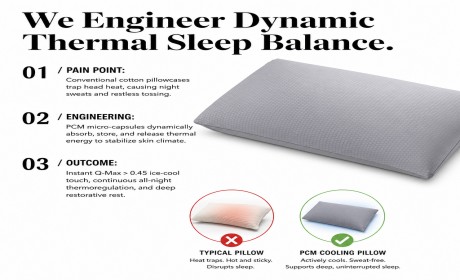
A PCM cooling pillowcase is designed with phase change materials that absorb and release heat as the material changes phase within its designed temperature range.
Unlike a conventional pillowcase, a PCM-based textile is intended to help manage temperature fluctuations at the material surface. Actual performance depends on the PCM formulation, application method, fabric construction, and testing conditions.
2. How Does PCM Technology Work?
Phase change materials can absorb thermal energy during a phase transition and release it as conditions change.
In bedding applications, this thermal buffering effect may help moderate changes in surface temperature. However, PCM does not actively refrigerate a pillow, and performance depends on the amount of PCM, its transition temperature, and the surrounding environment.
3. What Should You Look for in a Cooling Pillowcase?
When evaluating a cooling pillowcase, consider these factors:
Cooling performance: Look for relevant laboratory test results rather than relying only on marketing claims.
Breathability: Fabric construction can affect airflow and overall comfort.
Hand feel: Smoothness, softness, and stretch influence the user experience.
Moisture management: Evaluate the fabric's ability to handle moisture if this is a key product requirement.
Care requirements: Confirm whether the product is machine washable and how washing affects performance.
Construction: Hidden zippers, reversible surfaces, and suitable sizing can improve usability.
4. PCM vs. Cool-to-the-Touch Fabrics
Cool-to-the-touch fabrics are designed to create an immediate cooling sensation when they contact the skin. PCM materials, by contrast, are intended to absorb and release heat during a phase transition.
Some products combine these approaches, but they are not interchangeable. Brands should confirm which technology their material uses and validate any performance claims before publication.
5. How Can Bedding Brands Develop a Differentiated Cooling Pillowcase?
Product development should begin with the target consumer and the problem the product is intended to address.
A customized development project may involve:
Fabric and PCM material selection
Fabric weight, stretch, and surface feel
Standard, queen, and king sizing
Reversible or single-sided construction
Zipper and closure options
Color, branding, and retail packaging
Prototype development and performance testing
The goal is to create a product with a clear, testable value proposition—not simply add a cooling label to a standard pillowcase.
6. From Consumer Needs to Functional Bedding Innovation
For bedding brands, a cooling pillowcase can be a starting point for a wider functional sleep collection.
The development process can follow a practical sequence:
Consumer insight → Material selection → Product design → Prototype → Performance validation → Market launch
Working through these stages helps brands align product features with real consumer expectations and their target price positioning.
Conclusion
PCM cooling pillowcases offer one approach to temperature-regulating bedding. The right product depends on material performance, fabric comfort, construction, care requirements, and the needs of the target market.
For brands planning a new cooling bedding collection, thoughtful material selection and product validation are essential to developing a differentiated product.
Read More



 IPv6 network supported.