Why the Cooling Bedding Market Needs a New Definition
Jul 22, 2026
The Race to "Colder" Is a Race to Nowhere
Walk through any bedding trade show in 2026 and you will hear the same word 50 times before lunch: colder. Every cooling comforter brand — from DTC startups to big-box private labels — is fighting the same battle on the same battlefield. The conversation starts and ends with temperature.
Here is the problem: consumers do not actually want the coldest comforter. They want a comforter that helps them sleep comfortably through warm nights. And "comfortably" includes more than temperature — it includes how the product feels against the skin, how it drapes over the body, and whether it creates the cozy, enveloping sensation that makes people want to climb into bed.
The industry has conflated "cooling" with "cold" for so long that it has forgotten the other half of the equation. The result? A market flooded with thin, papery cooling blankets that feel nothing like a real comforter. Customers try them once and go back to their regular duvet — the one that feels like a hug, even if it runs warm.
This is not a product failure. It is a definition failure.
The Data Backs This Up
A 2025 consumer survey of 2,400 US bedding buyers found something counterintuitive:
What Consumers Say They Want
What They Actually Keep (90-Day Retention)
The coldest comforter available
34% retention
Cooling + soft and fluffy feel
71% retention
Hotel-quality loft with temperature control
82% retention
The pattern is clear: cooling gets the click. Comfort gets the keep.
Brand buyers and retail buyers are starting to notice this gap. We hear the same frustration from sourcing managers at every show: "I can find 100 suppliers who will make a cooling comforter colder. I cannot find one who can make it feel luxurious at the same time."
Not Colder. More Complete.
This is the insight that reshaped how we think about product definition.
A cooling comforter does not have to compete by feeling colder. It can compete by feeling more complete — delivering the full sensory experience of a premium comforter (loft, drape, hand feel, warmth balance) while maintaining temperature-regulating performance.
The Old Playbook
The New Playbook
Thinner = cooler
Structured loft with airflow channels
Compete on °C claims
Compete on sleep quality
Single-function fabric
Multi-layer system design
Price-driven sourcing
Solution-driven partnership
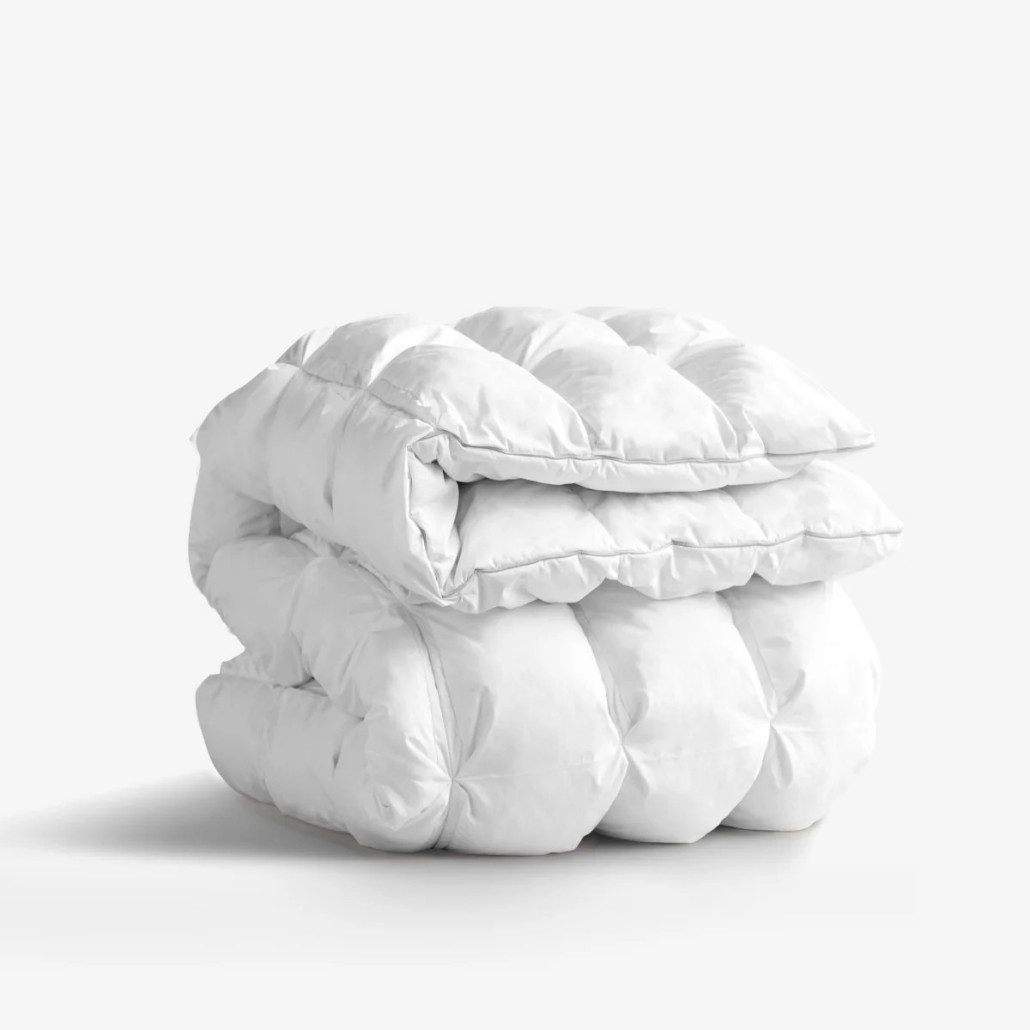
The visual tells the story instantly. On one side: a flat, thin product that feels cold but looks uninviting. On the other: a full, puffy comforter that reads as premium before the customer even touches it. That first impression — the visual of loft — does more selling than any spec sheet.
What "More Complete" Actually Means in Manufacturing
This is not marketing language. It maps to three specific manufacturing decisions that change the product outcome:
1. Fill Weight vs. Fill Distribution
Most cooling comforters reduce fill weight to improve airflow. That is why they feel thin. The alternative is to maintain fill weight but change the distribution pattern — using baffle-box construction to create structured channels where air moves freely while fill stays in place. Same amount of material, different architecture, radically different hand feel.
2. Shell Fabric: Open Weave vs. High Thread Count
The industry standard for cooling shell fabrics is an open, low-thread-count weave — it breathes, but it also feels rough and lacks drape. A high-thread-count shell with a breathable finish achieves the same airflow with a dramatically better tactile experience. The difference is immediately noticeable when a customer touches both side by side.
3. Quilting Pattern as Performance Feature
Most quilting is cosmetic. Baffle-box quilting is structural. The depth and spacing of the stitch lines directly control how much air moves through the comforter, how evenly the fill sits, and how the product recovers its loft after compression. These are not aesthetic choices — they are engineering parameters.
Inside the Baffle-Box: Three Performance Zones
The baffle-box is not just a quilting pattern. Each box creates three distinct functional zones:
Zone 1 — Baffle-Box Quilting. The deep recessed seams act as structural walls that prevent fill migration. In a standard sewn-through comforter, fill shifts over time, creating cold spots. The baffle wall stops this entirely — each chamber is an independent unit.
Zone 2 — Even Fill Distribution. Because each chamber is sealed, the fill stays exactly where it is placed during manufacturing. No clumping. No flat corners. The loft you see on day one is the loft your customer sees on day 365.
Zone 3 — Cooling Airflow. The recessed seam lines are not just structural — they are functional airflow channels. As warm air rises from the sleeper's body, it travels through these channels and exits the comforter. The result is passive temperature regulation with zero reliance on chemical cooling treatments.
What This Means for Your Product Line
If you are a brand buyer or a retail sourcing manager, here is the takeaway:
The next generation of cooling comforters will not be defined by how cold they feel.
They will be defined by how well they solve the full sleep comfort equation — temperature, touch, weight, and longevity — in a single product.
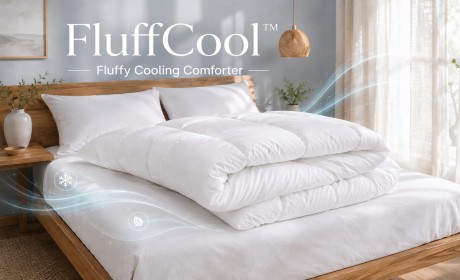
FluffCool™ is built for that next generation. It is not a product. It is a product definition — a framework your brand can adopt, customize, and bring to market under your own identity.
Build your next sleep product with us.
Our team works directly with brand and retail partners to adapt the FluffCool™ platform to your specifications — fill weight, shell material, quilting pattern, packaging, and branding.
FluffCool™ is a registered solution framework for ODM/OEM cooling comforter development. All products are manufactured to partner specifications under partner branding.
Read More




 IPv6 network supported.